Prep Time: 5 mins | Cook Time: 15 mins | Total Time: 20 mins | Yield: 2 servings
The transition from late winter into early spring is a pivotal time for anyone maintaining a healthy reset. After months of hearty stews and heavy root vegetables, our bodies naturally begin to crave lighter proteins and the crisp snap of fresh greens. This Sheet Pan Lemon Herb Salmon & Asparagus is designed to satisfy that craving while respecting the most valuable resource of any busy person: time. In just 20 minutes, you can have a restaurant-quality, high-protein meal on the table with zero cleanup.
This dish is a cornerstone of the Longevity Kitchen. By focusing on high-quality fats from Atlantic or wild-caught salmon and the prebiotic fiber found in young asparagus, we are feeding our bodies the essential building blocks for cellular repair, hormone balance, and sustained energy. It is an affordable luxury that proves you don’t need a complicated grocery list to achieve peak nutrition and flavor.
The Science of Omega-3s and Longevity
Salmon is often called a “superfood,” but its benefits go far beyond the marketing buzzword. It is one of the most concentrated sources of long-chain Omega-3 fatty acids (EPA and DHA).
- Anti-Inflammatory Power: Omega-3s are potent anti-inflammatories. In a world where chronic inflammation is a leading cause of fatigue and metabolic dysfunction, a weekly dose of salmon acts as a natural “reset” for your system.
- Cognitive Function: DHA is a major structural component of the human brain. Regular consumption of fatty fish has been linked to improved focus, better mood regulation, and long-term brain health.
- Metabolic Health: By providing a dense source of protein and healthy fats with zero carbohydrates, salmon is naturally glucose-friendly. It helps flatten the blood sugar curve, preventing the insulin spikes that lead to late-night sugar cravings.
Asparagus: The Prebiotic Powerhouse
Paired with the salmon is asparagus, one of the first heralds of the spring season. Asparagus is a rich source of inulin, a type of prebiotic fiber that isn’t digested in the stomach but instead travels to the large intestine where it becomes “food” for your beneficial gut bacteria.
- Gut-Health Support: A healthy microbiome is the foundation of a strong immune system. By incorporating fiber-rich spears like asparagus into your one-pan meals, you are supporting your gut health with every bite.
- Natural Diuretic: Asparagus contains an amino acid called asparagine, which acts as a natural diuretic, helping the body flush out excess salt and reducing the “bloat” often felt after a high-sodium winter diet.
Ingredients: The “Spring Bridge” Shopping List
To keep this recipe budget-friendly, we focus on a few high-impact ingredients.
- 2 (6 oz) Salmon Fillets (Fresh or thawed from frozen).
- 1 bunch Thin Asparagus Spears (Ends trimmed).
- 1 large Lemon (Half sliced into rounds, half for juicing).
- 2 Tablespoons Extra Virgin Olive Oil.
- 1 Tablespoon Fresh Herbs (Dill, parsley, or thyme work beautifully).
- 2 cloves Garlic (Minced).
- 1/2 teaspoon Sea Salt and Black Pepper.
- Optional Finish: A sprinkle of red pepper flakes or a teaspoon of capers for a “Dopamine Dining” flavor pop.
Step-by-Step Instructions: Perfection in 20 Minutes
1. Heat and Prep
Preheat your oven to 400°F (200°C). While the oven heats, line a large rimmed baking sheet with parchment paper. This is the secret to the zero-cleanup lifestyle.
2. The Asparagus “Nest”
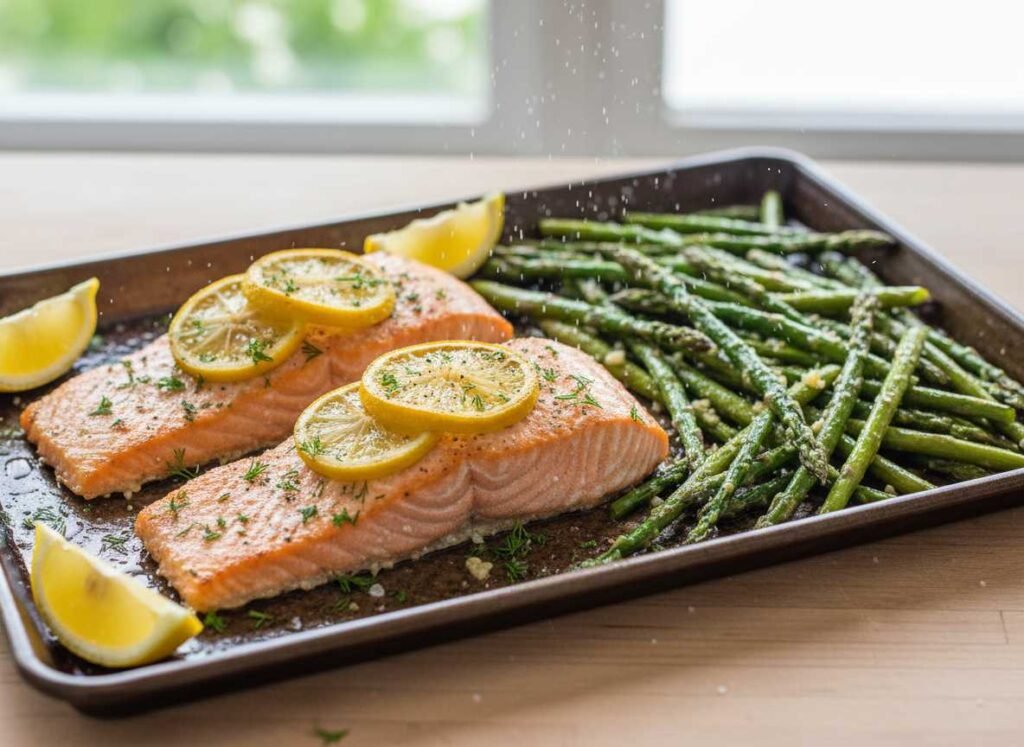
Place your trimmed asparagus in a single layer on one side of the pan. Drizzle with 1 tablespoon of olive oil, half of the minced garlic, and a pinch of salt and pepper. Toss them directly on the pan to ensure they are evenly coated.
3. The Salmon Centerpiece
Place the salmon fillets on the other side of the pan. Pat them dry with a paper towel—this is crucial for getting a beautiful sear on the outside rather than steaming the fish. Drizzle with the remaining olive oil, garlic, and herbs. Top each fillet with two lemon slices.
4. The Roast
Slide the pan into the oven. Bake for 12–15 minutes, depending on the thickness of your fillets.
- Pro-Tip: Salmon is cooked when it reaches an internal temperature of 145°F, or when it easily flakes with a fork. For the asparagus, you want it to be “fork-tender” but still have a slight snap.
5. The Finish
Remove the pan from the oven and immediately squeeze the remaining lemon juice over the entire pan. This “acid hit” cuts through the richness of the salmon and brightens the earthy notes of the asparagus.
Why This is the Ultimate “Healthy Reset” Meal
When we talk about a clean eating lifestyle, we aren’t just talking about calories. We are talking about nutrient density and hormonal response.
- The Satiety Factor: The combination of 30+ grams of protein and healthy fats in this meal triggers the release of leptin, the “fullness hormone.” You will find that you are satisfied much faster and for much longer than with a carb-heavy meal.
- Glowing Skin: The antioxidants in the lemon and the astaxanthin (the pigment that makes salmon pink) are known to support skin elasticity and protect against oxidative damage.
- Efficiency: Because it is a one-pot (or one-pan) wonder, the mental energy required to cook and clean is minimal, making it easier to stay consistent with your goals.
Budget and Variations
Salmon is often viewed as an expensive protein, but there are several ways to make this budget-friendly.
- Frozen Fillets: Buying a bag of frozen, individually wrapped salmon fillets is significantly cheaper than buying fresh from the counter, and because they are flash-frozen at the source, the nutrient profile is identical.
- Vegetable Swaps: If asparagus is out of your budget or not in season, this same method works perfectly with broccoli florets, green beans, or even sliced zucchini.
- The “Pantry” Herb Hack: If fresh herbs are too expensive, use 1 teaspoon of dried “Herbes de Provence” or Italian seasoning. It provides a similar aromatic experience for pennies.
Meal Prep & Storage
This is an excellent quick meal prep option for a healthy lunch the next day.
- Fridge: Store in an airtight glass container for up to 2 days.
- The Cold Salad Hack: Don’t reheat the salmon! Cold, flaked salmon is delicious when added to a bed of arugula or spinach for a “power bowl” lunch. If you must reheat, do so gently at a low temperature to avoid the “fishy” smell that occurs when salmon is overcooked in a microwave.
Frequently Asked Questions (FAQ)
Q: Should I leave the skin on the salmon? A: Yes! The skin acts as a natural barrier between the heat and the delicate flesh, keeping the salmon juicy. Plus, the skin is where many of the healthy Omega-3 fats are concentrated. You can easily slide the skin off after cooking if you prefer not to eat it.
Q: Can I use a different fish? A: Absolutely. Steelhead trout, halibut, or even cod work well with this method. Just adjust the cooking time based on the thickness of the fish—white fish usually cooks slightly faster than salmon.
Q: My asparagus is too mushy. What happened? A: This usually happens with very thin asparagus. If your asparagus is “pencil-thin,” wait to add it to the pan until the salmon has already been cooking for 5 minutes.
Conclusion: A Spring Vision of Health
The Sheet Pan Lemon Herb Salmon & Asparagus proves that the best meals are often the simplest. By leaning on high-quality ingredients and the efficiency of the one-pan method, you are choosing a lifestyle that values both your health and your time. It is a vibrant, delicious step toward your longevity goals.