Prep Time: 5 mins | Cook Time: 15 mins | Total Time: 20 mins | Yield: 4 servings
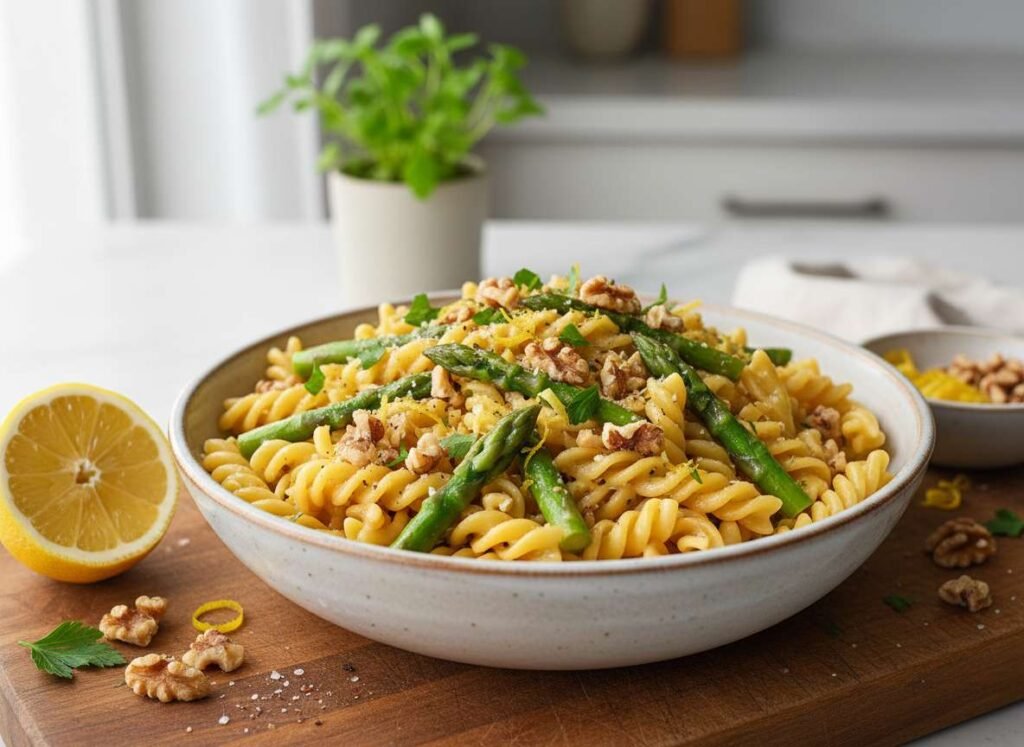
The arrival of the second week of March marks a psychological and biological turning point. As the days lengthen, our bodies naturally begin to shed the “winter coat”—both the physical layers and the metabolic sluggishness that comes from a season of heavy comfort foods. In the Longevity Kitchen, March is the month of “Internal Spring Cleaning.” This 20-Minute High-Protein Spring Lemon Asparagus Pasta is designed to support this transition. It is an affordable luxury that delivers the bright, zesty flavors of spring while prioritizing high-protein satiety and glucose-friendly stability.
One of the biggest hurdles to a successful healthy reset is the misconception that “healthy” means “low calorie” or “unsatisfying.” Traditional “light” pastas often leave you hungry within an hour because they lack the structural components of protein and fiber. This recipe is a “Metabolic Upgrade.” By utilizing chickpea-based pasta and a “Green Protein” strategy with asparagus and walnuts, we’ve created a meal that flattens the glucose curve and prevents the late-night cravings that sabotage your weight loss goals.
The Science of the Spring Reset Pasta
Why are we focusing on asparagus and lemon for your March wellness goals? These aren’t just seasonal flavors; they are biological tools designed for systemic renewal.
- Asparagus and Prebiotic Fiber: Asparagus is a premier source of inulin, a prebiotic fiber that specifically feeds the beneficial bacteria in your gut. As we navigate the seasonal shift, supporting your gut health is essential for maintaining a strong immune system and a stable mood.
- The “Protein Bridge”: Traditional wheat pasta can cause a sharp insulin spike. By swapping it for chickpea pasta, we increase the protein count to 25g per serving. This “Protein Bridge” ensures that the energy from the meal is released slowly, providing sustained focus for your evening.
- Lemon and Liver Support: Fresh lemon juice and zest contain d-limonene, a compound that supports the liver’s natural detoxification pathways. This is the essence of “Internal Spring Cleaning”—using whole foods to optimize your body’s existing filtration systems.
- Walnuts and Brain Health: As we emerge from the “winter fog,” the Omega-3 fatty acids in walnuts provide the cognitive support needed for the high-vibrancy energy of spring.
Why Frictionless Prep is a Wellness Strategy
In 2026, we recognize that “Decision Fatigue” is the primary reason for dietary derailment. If a healthy choice requires an hour of prep and a sink full of dishes, it won’t happen during a busy work week. Quick weeknight dinners are a productivity hack.
- One-Pot Synergy: In this recipe, the asparagus and pasta can be prepared in the same vessel. This not only preserves the nutrients in the asparagus but also creates a starchy “pasta water” that emulsifies with the lemon and olive oil into a silky, dairy-free sauce.
- 15-Minute Cooking: High-protein pastas generally have a shorter cook time than traditional wheat pasta. This allows you to go from “pantry to plate” in under 20 minutes, preserving your mental energy for rest and recovery.
- Inflation-Busting Sourcing: This recipe relies on pantry staples like olive oil, garlic, and walnuts. By focusing on seasonal asparagus, you are getting the highest nutrient density for the lowest possible price point.
Ingredients (All Amounts Listed)
- 10 oz High-Protein Chickpea Pasta (Penne or Rotini work best).
- 1 large bunch Fresh Asparagus (Trimmed of woody ends, cut into 1-inch pieces).
- 1/2 cup Raw Walnuts (Roughly chopped—for the “Healthy Fat” crunch).
- 3 Tablespoons Extra Virgin Olive Oil.
- 4 cloves Garlic (Thinly sliced).
- 2 large Lemons (Zested and juiced).
- 1/2 cup Fresh Flat-Leaf Parsley (Finely chopped).
- The “Free” Flavor Essentials: 1/2 teaspoon sea salt, 1/4 teaspoon black pepper, and a pinch of red pepper flakes for a “Dopamine” kick.
Step-by-Step Instructions: The 20-Minute Masterpiece
1. The Pasta Foundation
Bring a large pot of salted water to a boil. Add the chickpea pasta. Chickpea pasta tends to foam more than wheat pasta, so keep a close eye on it! Cook according to the package directions, but aim for “al dente.”
2. The “Spring Green” Fusion
During the final 3 minutes of the pasta’s cook time, add the asparagus pieces directly into the boiling pasta water. The asparagus will turn a vibrant, emerald green and become perfectly tender-crisp at the exact moment the pasta is done.
3. The “Liquid Gold” Reserved
Before draining, reserve 1/2 cup of the pasta cooking water. This is the secret to a creamy sauce without the “vin” (wine) or heavy dairy. Drain the pasta and asparagus.
4. The Aromatic Sauté
In the same pot (now empty), heat the olive oil over medium heat. Add the garlic and red pepper flakes. Sauté for 60 seconds until the garlic is fragrant and just beginning to turn golden. Add the chopped walnuts and toast for another 60 seconds.
5. The Emulsion Phase
Return the pasta and asparagus to the pot. Add the lemon juice, lemon zest, and the reserved pasta water. Toss vigorously over low heat. The starch in the water will emulsify with the olive oil, creating a glossy, silky sauce that coats every noodle.
6. The Brightening Finish
Turn off the heat. Stir in the fresh parsley, salt, and pepper. The visual “Glow Up” of the green herbs against the yellow lemon zest is pure Dopamine Dining. Serve immediately in wide bowls.
Why This Works for Your Healthy Reset
As we move through March, consistency is the goal.
- Stable Energy: The 25g of protein and 12g of fiber per serving ensure you don’t experience a “glucose spike.” This is a glucose-friendly masterpiece that keeps your focus sharp and your hunger at bay.
- Gut-Health Synergy: Prebiotic-rich asparagus and garlic feed your microbiome as you transition into spring.
- Clean Eating Logic: There is no “vin,” no “lardons,” and no hidden sugars. Just pure, whole ingredients that support longevity.
Frequently Asked Questions (FAQ)
Q: Can I use a different pasta? A: You can, but to maintain the high-protein profile and the glucose-friendly status, we recommend chickpea, lentil, or edamame pasta.
Q: My chickpea pasta is mushy, what happened? A: High-protein pastas have a very narrow window of perfection. Always check them 2 minutes before the package says they are done. Rinsing with cold water (if not using a pan sauce) can help, but for this recipe, the pan-toss is essential.
Q: Is this safe for a Vegan diet? A: Yes! This recipe is naturally vegan-friendly and dairy-free. The walnuts provide a satisfying umami and “parmesan-like” crunch without the need for cheese.
Conclusion: Efficiency as a Celebration
The 20-Minute High-Protein Spring Lemon Asparagus Pasta proves that an “Internal Spring Cleaning” doesn’t have to be restrictive or boring. By embracing the efficiency of the one-pot method and the vibrant flavors of the March reset, you are reclaiming your time and your health. Save this recipe for your next “busy Tuesday” and experience how easy affordable luxury can truly be.