Time: 20 mins | Yield: 4 jars
The arrival of the third week of March marks a psychological turning point in the “Spring Awakening.” On this Wednesday morning, the air feels lighter, but the mid-week hustle often threatens to derail our healthy reset. In the Longevity Kitchen, we combat this “decision fatigue” with vertical logic. This 20-Minute High-Protein Spring Quinoa & Asparagus Jar Salad is the flagship tool for this transition. It is an affordable luxury that delivers the crisp, vibrant energy of a spring garden while functioning as a metabolic “safety net” for your busiest workdays.
The primary obstacle to successful meal prep for beginners is the “soggy salad syndrome.” Traditional pre-mixed salads often lose their structural integrity within hours, resulting in an unappealing texture that sends you straight to the nearest delivery app. At quickveganrecipe.com, we specialize in the “Metabolic Upgrade.” By utilizing the Mason Jar Method—layering heavy, moisture-resistant ingredients at the bottom and delicate greens at the top—we preserve the heat-sensitive enzymes and “shatter-crisp” textures of spring. This jar isn’t just lunch; it’s a functional strategy designed to support your gut-skin axis and ensure a flat glucose curve.
The Science of the Spring Jar Reset
Every layer of this jar has been selected for its bioactive role in your longevity and gut health. When we consume high-protein pulses paired with prebiotic fibers in a specific sequence, we provide the body with a slow-release fuel source that clears the “winter brain fog.”
- Asparagus and Inulin Bulk: Asparagus is a premier source of inulin, a type of prebiotic fiber that specifically feeds the Bifidobacteria in your microbiome. A flourishing gut microbiome is the secret to a successful spring de-bloat and improved systemic radiance. By placing the asparagus in the middle of the jar, we protect its texture while allowing it to marinate slightly in the lemon vapors.
- Quinoa and the “Complete” Protein Bridge: Unlike wheat-based grains, quinoa contains all nine essential amino acids. This makes it a “complete” protein source that acts as a metabolic “net,” ensuring that the natural sugars in the vegetables are absorbed slowly. This provides 20g of protein per jar, keeping you satiated until dinner.
- Tahini and Healthy Monounsaturated Fats: The dressing at the bottom uses tahini, which is rich in sesame lignans. These compounds have been shown to support cardiovascular health and reduce oxidative stress. The fats also trigger the release of $OEA$, the hormone that signals your brain to lower hunger levels.
- Radishes and Sulfur-Rich Detox: Spring radishes provide the “Spring Awakening” zing. They are rich in sulfur-rich compounds that support the liver’s natural Phase II detoxification pathways. This is the essence of “Internal Spring Cleaning”—using whole foods to optimize your body’s existing filtration systems.
Why Frictionless Prep is a Wellness Strategy
In 2026, we recognize that stress is a major contributor to systemic inflammation. A chaotic kitchen on a Wednesday night is a stressor. Vertical meal prep is a productivity hack that preserves your mental energy for the things that truly matter.
- Zero-Friction Routine: This recipe requires only twenty minutes of active work. By cooking a large batch of quinoa once and chopping your spring vegetables in one sitting, you reduce the “friction” of making a healthy choice for the next four days.
- Nutrient Preservation: By keeping the dressing separated from the greens, you prevent the premature breakdown of cellular walls in the vegetables. This means your Thursday lunch has the same Vitamin C content and enzyme activity as your Monday lunch.
- Inflation-Busting Sourcing: This recipe relies on pantry staples like dried quinoa and canned chickpeas. By focusing on seasonal asparagus and radishes, which are at their peak and most affordable in mid-March, you create a gourmet experience for under $3.00 per jar.
Ingredients (All Amounts Listed)
- 1.5 cups Cooked Quinoa (Chilled—the “Protein Bridge”).
- 2 cups Cooked Chickpeas (Drained and rinsed).
- 1 large bunch Fresh Asparagus (Trimmed and cut into 1-inch pieces).
- 1 bunch Fresh Spring Radishes (Thinly sliced into half-moons).
- 2 cups Fresh Baby Spinach or Arugula (Packed).
- 1/4 cup Tahini (The creamy, high-protein dressing anchor).
- 2 Tablespoons Fresh Lemon Juice.
- The “Free” Flavor Essentials: 1 clove minced garlic, 1/2 teaspoon sea salt, 1/4 teaspoon black pepper, and 1 teaspoon Dijon mustard.
Step-by-Step Instructions: The 20-Minute Masterpiece
1. The “Glow” Dressing
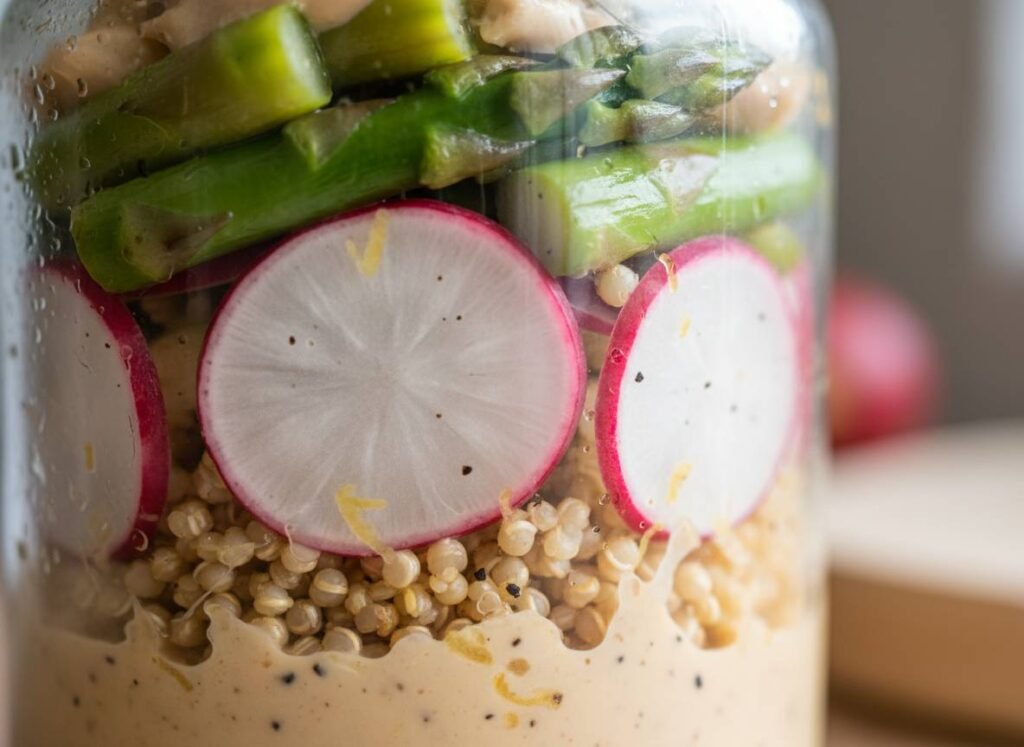
In a small bowl, whisk together the tahini, lemon juice, minced garlic, and Dijon mustard. If the dressing is too thick, add a teaspoon of water until it reaches a “pourable” consistency. Divide this dressing equally among the bottom of 4 large mason jars.
2. The Heavy Layer (The “Buffering” Phase)
Divide the chickpeas among the jars, placing them directly on top of the dressing. Chickpeas are moisture-resistant and actually benefit from marinating in the lemon-tahini sauce, becoming more flavorful over time.
3. The Protein Core
Layer the chilled quinoa over the chickpeas. The quinoa acts as a “barrier,” preventing the moisture from the dressing from reaching the more delicate vegetables in the upper layers.
4. The “Spring Awakening” Texture
Add the asparagus pieces and radish half-moons. These vegetables provide the “shatter-crisp” crunch and the prebiotic fiber needed for the spring de-bloat.
5. The Delicate Crown
Finish by packing the baby spinach or arugula into the top of the jar. By keeping the greens at the very top, far away from the dressing, they remain crisp and vibrant for days.
6. Serving with Intention
Seal the jars and refrigerate. When you are ready to eat, simply shake the jar vigorously to distribute the dressing and pour it into a bowl. The visual “Glow Up” of the emerald greens against the golden quinoa is pure Dopamine Dining.
Why This Works for Your Healthy Reset
- Stable Glucose: The high fiber-to-protein ratio ensures a slow glucose release, preventing the “afternoon slump” and keeping your focus sharp through your 3:00 PM meetings.
- Gut-Health Synergy: Prebiotic-rich asparagus and chickpeas feed your microbiome as you transition into spring.
- Clean Eating Logic: There is no “vin,” no “les lardons,” and no hidden sugars. Just pure, whole ingredients that support longevity.
Frequently Asked Questions (FAQ)
Q: Can I use a different grain?
A: You can, but quinoa provides the highest protein count and the best “buffer” texture for jar salads. Farro or brown rice are good alternatives but will slightly increase the carb count.
Q: How long do these actually stay fresh?
A: When layered correctly, these jars stay perfectly fresh in the refrigerator for up to 4 days. After day 4, the radishes may lose some of their “snap.”
Q: My tahini dressing is bitter, what happened?
A: Tahini can vary in bitterness. If yours is too sharp, add a tiny drop of maple syrup or a little extra lemon juice to balance the flavors.
Conclusion: Efficiency as a Celebration
The 20-Minute High-Protein Spring Quinoa & Asparagus Jar Salad proves that a healthy reset can be the highlight of your workday. By embracing the efficiency of vertical meal prep and the vibrant flavors of the March reset, you are reclaiming your time and your health. Save this recipe for your next Sunday prep and experience how easy affordable luxury can truly be.